

War ! What is it good for ?
8 / 10Sun_Shang_Xiang · 2011
Well, according to Edwin Starr (who's actually correct) Absolutely Nothing , but hang on... what about NHK's drama on the Russo-Japanese War ? Saka no Ue no Kumo is a lavish production, NHK must have blown a pile of Yen on this production, usually the digital explosions and fires in Japanese dramas look lame but the effects were really good in this.
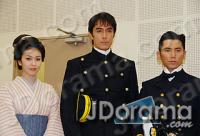
It did show the horror of war (you only get to see this in the 4 episodes of the third/last arc)but should have been more critical of war - however this is a bit difficult being as it seen as a high point in Japanese history.However during the episode which focuses on the taking of Hill 203 over Port Arthur , NHK couldn't resist putting on the stirring music after the position was taken with the rising sun flag flutterring on top of the hill.The Russian fleet was in a pretty bad state by the time it reached the straits of Tsushima, however this isn't shown, as it would obviously detract from the victory.Out of deference for Japan's neighbours the Ching Empire (which at that time was the proper title I guess) and not China is used and I don't recall seeing a single Korean in the series.Kagawa Teruyuki as Masaoka Shiki for me provided the best performance, whilst Satomi Ishihara and Matsu Takako are reduced to playing beautiful vases.Motoki Masahiro did a pretty decent job as Akiyama Saneyuki.Whilst Abe Hiroshi and Kanno Miho's talents weren't effectively utilized.