Shiroi Haru

白い春 · White Spring

  • Winter
  • Spring 2009
  • Summer
  • Autumn
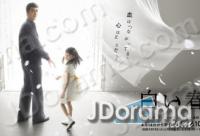
Shiroi Haru key art
© Fuji TV
NetworkFuji TV
Broadcast14 Apr 2009 – 23 Jun 2009
Episodes11 Episodes
ViewershipAverage 12.5%
Fan score 8.9 from 7 reviews
Genresdrama family

Synopsis

A former yakuza, Haruo is finally released from prison after completing his sentence. With nine years worth of prison gratuities in hand, he stops at a restaurant to enjoy a good meal, but all of his money ends up being stolen. With nothing left, he spends the night at a net cafe, and he manages to look up his old friend from his yakuza days. When Haruo visits the next day, he learns that his old girlfriend Mariko was living with another man, but later died of illness. Haruo, who had committed murder nine years earlier to earn the money for Mariko's medical treatment, is shocked and angered. He decides to track down that other man, who runs a bakery with his wife and daughter Sachi. Haruo later runs into Sachi at the park, but he has yet to find out the truth about her.

Synopsis: Tokyograph

Cast & characters 25 credited

Theme song

  • “Yokogao” — Sakai Ayumi

Fan reviews 7 reviews

8.9/ 10
10 0
9 6
8 1
7 0
1–6 0

Really Good

9 / 10

Sun_Shang_Xiang · 2010

I really enjoyed this, great performances from Abe Hiroshi and Endo Kenichi who I've only seen in scary roles before as loving step father, Endo kenichi seems in the zone now in the role nice step father as he also does in the same thing in the Asadora Teppan. There were parts when I felt that the drama was a little cheesy. The only negatives about the drama are that Shiraishi Miho and Konno Mahiru didn't do much, so there wasn't much romance and that this drama aired the same time as Aishiteru Kaiyo which is the better drama.

A must see for drama fans

9 / 10

yangsing · 2010

Getting straight to the point, Shiroi Haru is one of the best Japense dramas I have seen in quite some time. You know you are watching something special when you canft stop watching until youfve reached the end. Shiroi Haru pulls you in emotionally and is intriguing enough to have watchers glued to their televisions; qualities which you will find in any admirable drama. That is not to say Shiroi Haru is perfect, it has a couple drawbacks that brings it down a peg.

Shiroi Harufs story is compelling albeit dragged out on occasion and predictable; something most avid fans of Asian dramas are familiar with. Viewers witness Abe Hiroshifs character struggle to readjust to normal life after prison, dealing with unanswered questions, and a few big surprises thrown in for good measure. The trials the characters go through in Shiroi Haru can be depressing at times but also uplifting at times. Some characters in the drama stick out like a thorn which will have viewers question their necessity in the story. The only real big negative in the drama as a whole is the ending; unnecessary and tacked on.

Where the story and plot fail at times, it is the actors in Shiroi Haru that propel this drama. The actors in Shiroi Haru perform exceptionally. Abe Hiroshi shows audiences again why he is one of the best Japanese actors. Hiroshifs portrayal of Sakura Haruo is outstanding and viewers will invest emotionally into his character. Ohashi Nozomi also did a fine job as Sachi, her smile could light up a room.

One more thing to mention, music in a drama can hurt or bring life to it. Yokogao by Sakai Ayumi is the perfect song that expresses the emotions in Shiroi Haru.

Summary: An emotional story and characters that pull you in. Not perfect but a must see if you consider yourself an avid drama fan.

I'm Dreaming of a White Spring

8 / 10

chesed · 2010

Shiroi Haru is, much like the season itself, about change.

Let's dispense with the obvious: Abe Hiroshi is an excellent actor, and again he does not disappoint in this drama. But I would be remiss not to mention Endo Kenichi, who also not only performed his role well, but well in the light of possible expectations given his gruff appearance and past roles. We know Abe Hiroshi can play a myriad of characters, but to perform well alongside him, and not simply as a shadow, is nice to see.

Throughout the series we witness a change primarily in Haruo and Koji, but other characters undergo minor changes as well. But every decent series must have change in the characters. So what is different here? Ultimately, there is a transition in the main characters from caring about themselves to caring about others, with tears washing away the dirt that has been collected so that the innocence of childhood is not diminished by the stains of adulthood.

The series could potentially be slower for some people to watch. Many of the nuances of the show are subtle and slow to show, but every episode does induce change in at least one character. Given the maturity of the subject matter, which isn't about violence or other adult themes but rather respect and dignity, the pacing is smooth and flowing -- a comfortable ride.

Perhaps too comfortable. For the most part, Shiroi Haru is predictable. It is not necessarily a bad thing, as shock and awe isn't what this series is about. It's about change, and the audience needs to know what causes each change. So it makes sense that we are hinted at what is to come. Even the ending was apparent fairly early on. Honestly, if the end wasn't what it was, I would have felt cheated out of a great moment. Many people wanted something else, but I believe it was fitting and even desirable. I cannot argue more without spoiling the end, but this reviewer relished in its significance.

The main drawback to the show was that it could have been more. Some characters could have been expanded on a lot, especially Kanoko and Shiori. Sure, a diversion made have sidetracked us from the main plot, but then again, there really wasn't one. It wasn't about one story, but what connected all the stories together in each episode. Still, it would have been a major boost if Haruo and Shiori's relationship as substitute father/daughter would have been given more time. Alas, I guess there's only so much you can do within one season.

I enjoyed Shiroi Haru. Will I remember it years later? Probably not. But it did communicate well the themes it covered, and the ending made it worth it.
All 7 reviews